
photo: © International Ice Hockey Federation / Tim Austen
Representatives of the IIHF and the 2026 IIHF Women’s World Championship organizing committee held a press conference on the morning of the final game day. Topics ranged from the tournament itself to the overall state of women’s hockey and its future.
The 2026 edition was the first to be held in November, a move designed both to make it possible for North American professional players to participate and to give the women’s tournament the opportunity to be the only show in town.
“This championship marked an important change for women's hockey. The move to November has created a new opportunity to attract greater attention to the women's game, to reach new audiences and give these outstanding players the visibility they really deserve,” IIHF President Franz Reindl said.
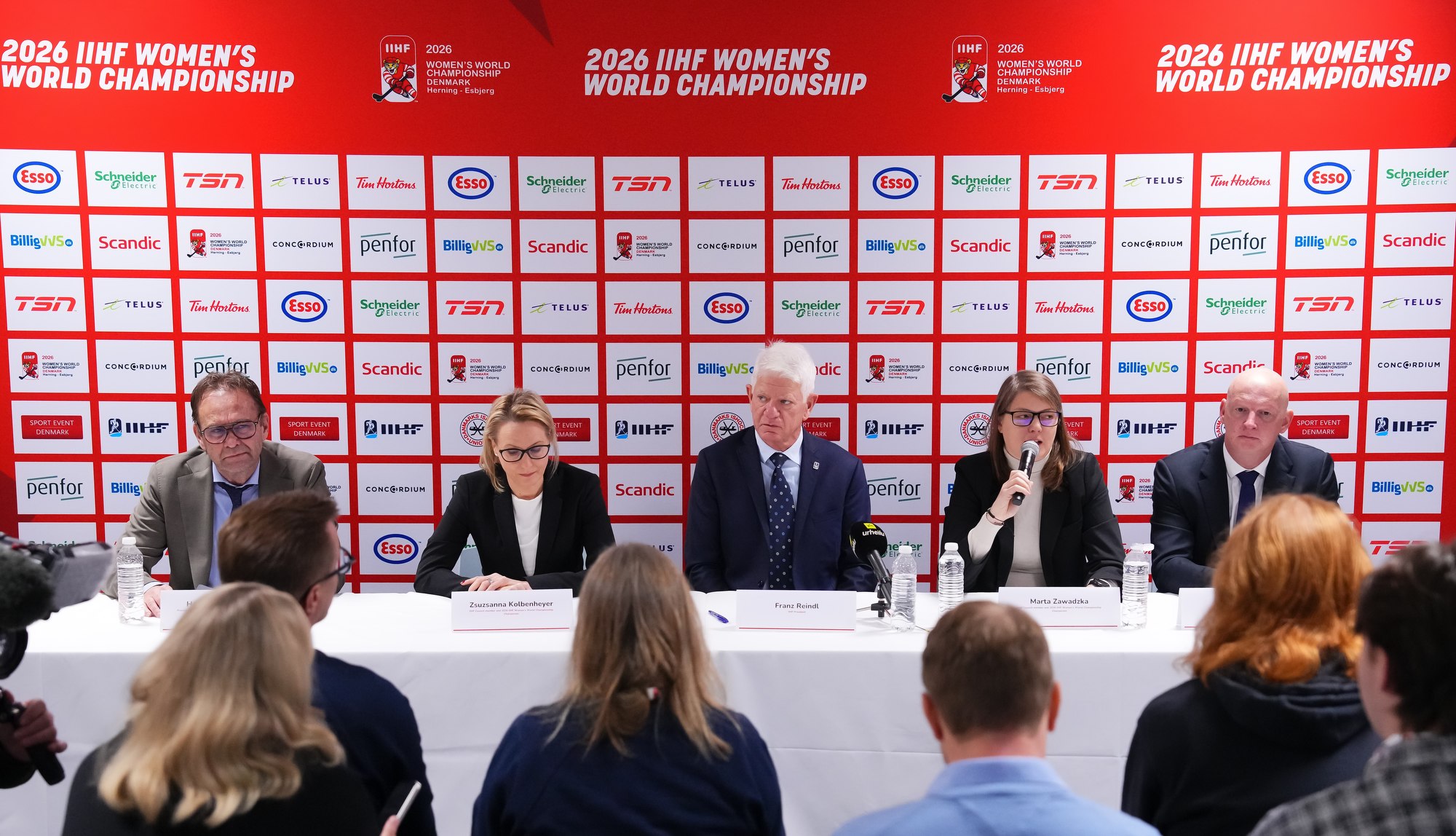
The tournament was hosted by Denmark. Herning, where the gold medal game will be played, previously hosted the men’s IIHF World Championship in 2018 and 2025, as well as the Women’s World Championship in 2022.
“It’s my third time in Denmark and my second time in Herning, so coming here, I knew how great the hospitality would be and that all the athletes, fans, staff members and the IIHF would feel very comfortable here,” said Marta Zawadzka, IIHF Council Member and co-chairperson of the 2026 IIHF Women’s World Championship.
“The Danish Ice Hockey Federation always delivers the highest quality of service as tournament hosts and organizers,” Zawadzka added.
Alongside the change in timing, the tournament format was also revised. Previously, the highest-ranked teams played in a group of their own. In Denmark, the teams were divided into two groups using a “snake” format based on the rankings. One of the reasons behind the decision was to give all teams the opportunity to play against the best players in the world.
The changes seem to have worked, at least judging by the increased media attention.
“The media interest here is really encouraging. All in all, we have 72 media representatives from twelve countries, including some countries that aren't competing in this tournament, which is great,” said Zsuzsanna Kolbenheyer, IIHF Council Member and co-chairperson of the tournament.
Henrik Bach Nielsen, IIHF Council Member and chair of the tournament organizing committee, also pointed out that attendance figures, while not in the thousands across the board, have been encouraging.
“When it comes to attendance, yes, we are not Finland or North America, but Denmark’s game against Canada drew more than 1,800 people, a record for a women’s hockey game in Denmark,” said Henrik Bach Nielsen.
“The game has improved as well and, as I have said before, the time is now. It’s not about the future; women's hockey’s time is now,” Reindl concluded.
The 2026 edition was the first to be held in November, a move designed both to make it possible for North American professional players to participate and to give the women’s tournament the opportunity to be the only show in town.
“This championship marked an important change for women's hockey. The move to November has created a new opportunity to attract greater attention to the women's game, to reach new audiences and give these outstanding players the visibility they really deserve,” IIHF President Franz Reindl said.
The tournament was hosted by Denmark. Herning, where the gold medal game will be played, previously hosted the men’s IIHF World Championship in 2018 and 2025, as well as the Women’s World Championship in 2022.
“It’s my third time in Denmark and my second time in Herning, so coming here, I knew how great the hospitality would be and that all the athletes, fans, staff members and the IIHF would feel very comfortable here,” said Marta Zawadzka, IIHF Council Member and co-chairperson of the 2026 IIHF Women’s World Championship.
“The Danish Ice Hockey Federation always delivers the highest quality of service as tournament hosts and organizers,” Zawadzka added.
Alongside the change in timing, the tournament format was also revised. Previously, the highest-ranked teams played in a group of their own. In Denmark, the teams were divided into two groups using a “snake” format based on the rankings. One of the reasons behind the decision was to give all teams the opportunity to play against the best players in the world.
The changes seem to have worked, at least judging by the increased media attention.
“The media interest here is really encouraging. All in all, we have 72 media representatives from twelve countries, including some countries that aren't competing in this tournament, which is great,” said Zsuzsanna Kolbenheyer, IIHF Council Member and co-chairperson of the tournament.
Henrik Bach Nielsen, IIHF Council Member and chair of the tournament organizing committee, also pointed out that attendance figures, while not in the thousands across the board, have been encouraging.
“When it comes to attendance, yes, we are not Finland or North America, but Denmark’s game against Canada drew more than 1,800 people, a record for a women’s hockey game in Denmark,” said Henrik Bach Nielsen.
“The game has improved as well and, as I have said before, the time is now. It’s not about the future; women's hockey’s time is now,” Reindl concluded.