
When outdoor enthusiasts adhere to ‘the campsite rule,’ it means they strive to leave their surroundings better than they found them. That sets up a positive experience for the next campers that come along.
The same principle also applies to sports teams. It’s certainly the case for French national team captain, Lore Baudrit, who retired this spring after helping her squad secure promotion to the top division at the 2026 Women’s World Championship Division I Group A tournament in Budapest, Hungary in April.
“When I started with the national team more than 15 years ago, we can see it’s a lot of improvement,” said the 34-year-old centre. “At the same time, it's still a lot of work to do. The game, the structure and everything around it is much better.”
Baudrit’s journey began in the small city of Castres, 80 km east of Toulouse in the South of France.
“I was six years old,” she recalled. “No one in my family knew about hockey. In my region, it’s rugby, the first sport, not even soccer. So it was just luck. I saw some hockey when I was young. I did some skating with my little school when I was four years old, and I loved it. I told my parents, ‘I want to do that,’ but they didn't know hockey, so it was a little bit tricky. No women — only one in the whole club — but they finally said ‘Yes, you will try.’ And it was forever.”
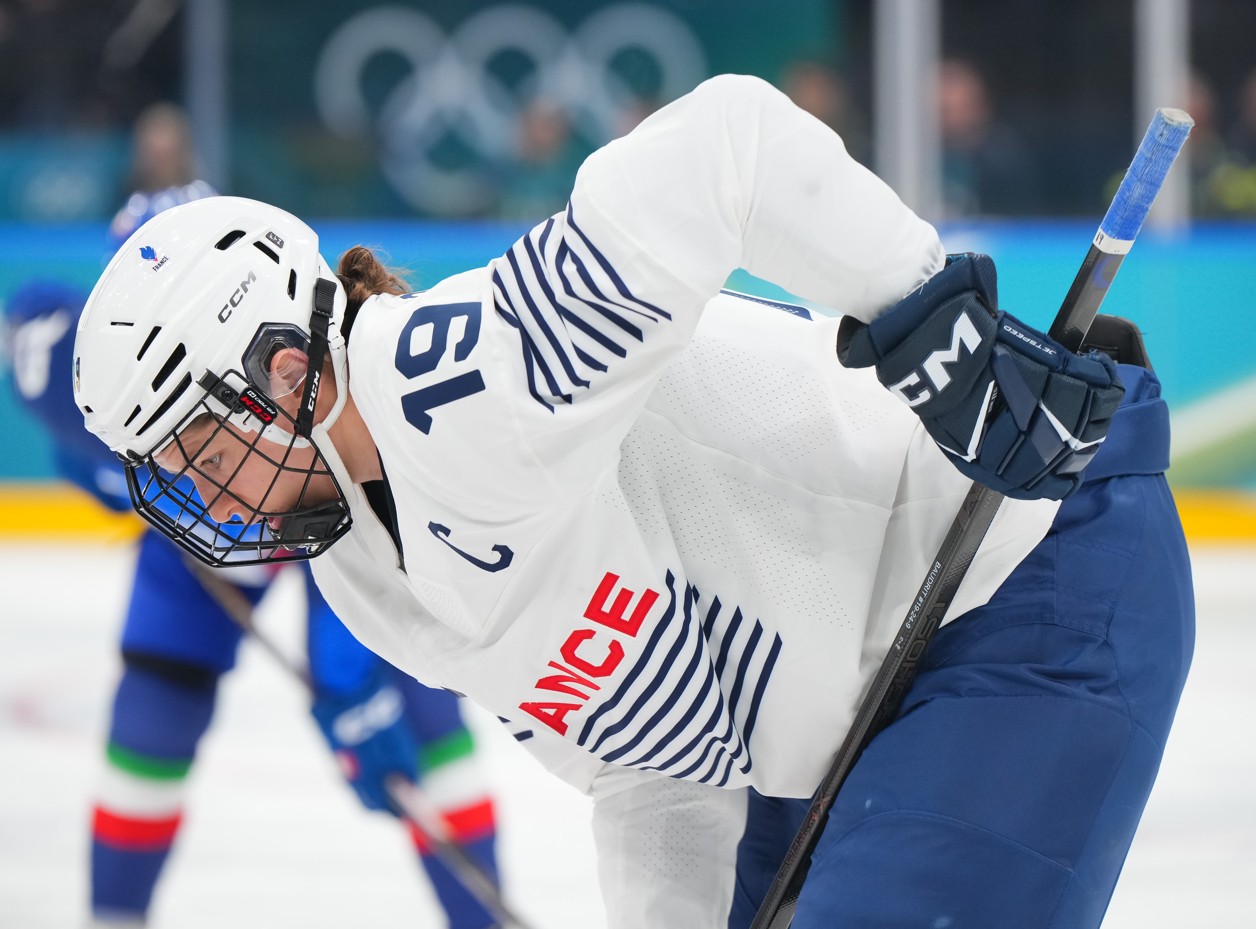
After the IIHF’s Women’s World Championship premiered in 1990, lower-division competition was added starting in 1999. In 2008, at age 16, Baudrit made her debut with the French national team at the Division I Women’s Worlds in Latvia. The following year, she suited up for her country three times: at D1 Worlds, Olympic qualifiers and the first-ever Division I Under-18 Women’s Worlds. After that, she never looked back.
Checking in at an imposing 190 cm and 86 kg and shooting right, she moved to Canada in 2012 and played at the University of Montreal for five years. Then, she spent one additional year in Montreal with Les Canadiennes in the CWHL before continuing her career in Sweden in 2018, then moved on to Germany in 2024.
That globetrotting helped her grow her game and develop as a person.
“I think to play in different countries, have different coaches with different philosophy and vision, opened my mind also as a player,” she said. “The coaches bring different topics and points they want to develop the most. I think that helped me to be a more open player, to want to develop different stuff and I can add with time, different skills. Definitely, that opened my mind.”
With Baudrit on the roster, France earned promotion to the top division at Women’s Worlds in 2019 and 2023. But both times, the team’s stay lasted just one year. Then, after playing in qualifying tournaments for four Olympic cycles, Baudrit’s team finally qualified for the 2026 Games.
France’s Olympic debut was a challenging matchup against the host Italians, a 4-1 loss on the first day of competition on 5 Feb at Milano Rho Ice Hockey Arena.
“The first time we went on the ice when we played against Italia, the game was tough,” Baudrit recalled. “I was disappointed about the performance but at the same time — just playing for the first time ever in the rink — it was almost full. It was a very good atmosphere. It was something big. I had that dream for so long, just to be there and experience that with all the team.”
Over four games at the Olympics, France earned one point in a 2-1 overtime loss to Germany on 9 Feb. But with a return berth guaranteed as the host nation for the 2030 Winter Olympics, Milano Cortina was an invaluable learning opportunity.
“The Olympics is big,” Baudrit said. “It's bigger than everything we experienced before. It’s kind of a rollercoaster, a little bit. You need to adjust because it's so much — at the village, at the rink, around the media — that we aren't used to. That was a lot to manage but I think it was it was a good experience for the team. Most of the players will be there in 2030. We host, so we know we will be there.”
As a leader, Baudrit strives to be true to her identity and allow her teammates to do the same.
“I think I try to stay myself,” she said. “I don't want to be someone else. I try to help everybody to make sure everybody feels confident to play like they're 100 percent.”
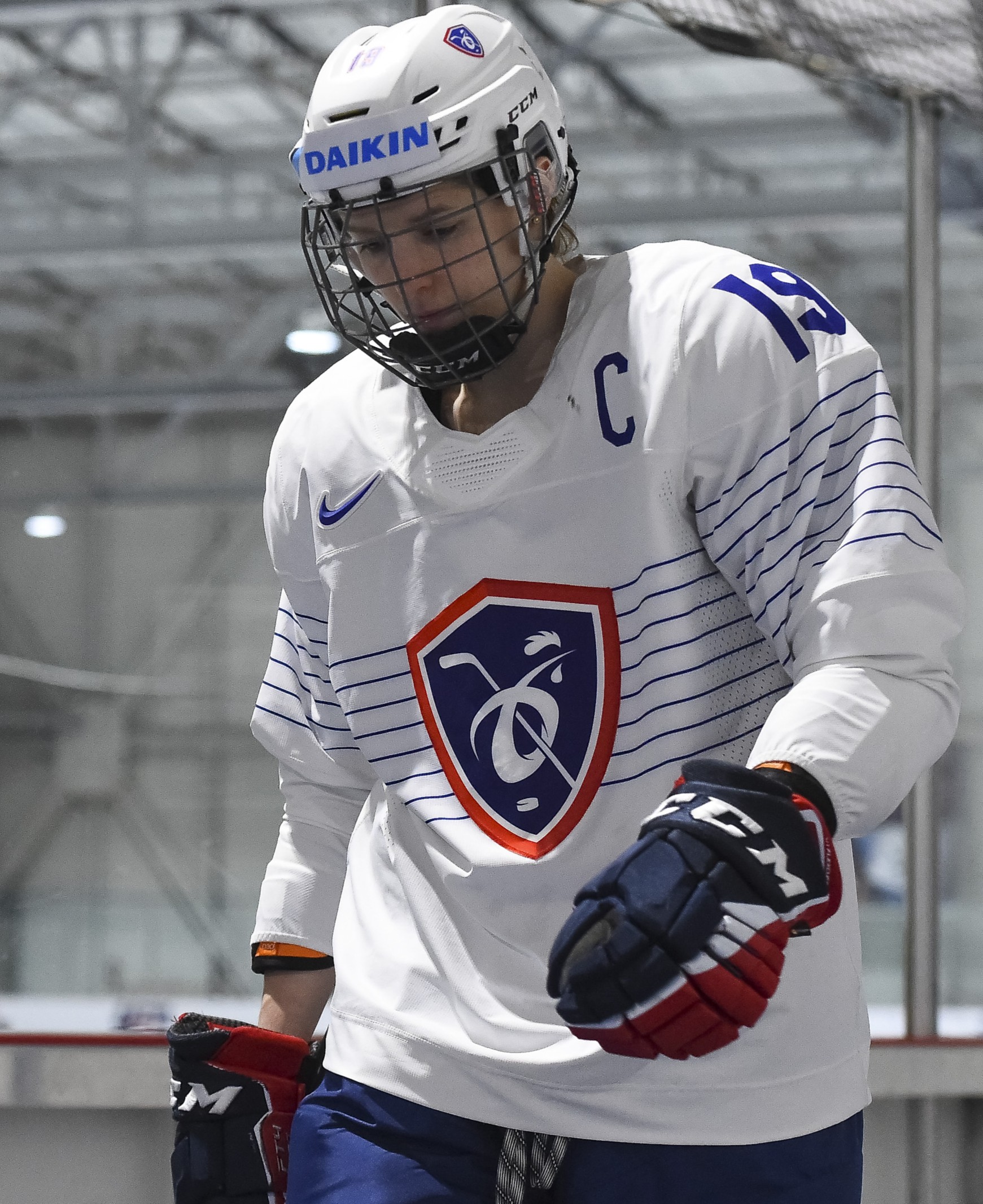
Baudrit believes the best success comes from the ‘all for one and one for all’ approach famously championed by French author Alexandre Dumas in The Three Musketeers.
“Just play together,” she said. “Be happy when someone has success. That is important because if we have an individual success, that brings it for all the team. We try to make these vibes be happy for everybody. We want to be a very close team.”
After realizing her dream of playing in the Olympics, Baudrit was thrilled to finish her career by helping to elevate France back to the top division for the 2027 Women’s World Championship, which will take place in Quebec City, Canada.
“It’s everything,” she said. “I'm so proud of playing with the girls for Team France. That gives me the most energy I can have. It's so big, to represent my country, to represent the girl beside me, the coaching staff, the staff overall. It's big for us and we are so proud as a French player to play for our country, our family, the people who support us for so long.”
As she moves to a new chapter in her life, Baudrit reflects on the experiences she has gained from a lifetime of hockey.
“If I look back, it's just meeting people, different cities, different cultures, that matters the most. It's what I can bring, also, after my hockey career. It's a good memory to meet a lot of different people and play with players from everywhere in the world. That is very cool, I think.”
The same principle also applies to sports teams. It’s certainly the case for French national team captain, Lore Baudrit, who retired this spring after helping her squad secure promotion to the top division at the 2026 Women’s World Championship Division I Group A tournament in Budapest, Hungary in April.
“When I started with the national team more than 15 years ago, we can see it’s a lot of improvement,” said the 34-year-old centre. “At the same time, it's still a lot of work to do. The game, the structure and everything around it is much better.”
Baudrit’s journey began in the small city of Castres, 80 km east of Toulouse in the South of France.
“I was six years old,” she recalled. “No one in my family knew about hockey. In my region, it’s rugby, the first sport, not even soccer. So it was just luck. I saw some hockey when I was young. I did some skating with my little school when I was four years old, and I loved it. I told my parents, ‘I want to do that,’ but they didn't know hockey, so it was a little bit tricky. No women — only one in the whole club — but they finally said ‘Yes, you will try.’ And it was forever.”
After the IIHF’s Women’s World Championship premiered in 1990, lower-division competition was added starting in 1999. In 2008, at age 16, Baudrit made her debut with the French national team at the Division I Women’s Worlds in Latvia. The following year, she suited up for her country three times: at D1 Worlds, Olympic qualifiers and the first-ever Division I Under-18 Women’s Worlds. After that, she never looked back.
Checking in at an imposing 190 cm and 86 kg and shooting right, she moved to Canada in 2012 and played at the University of Montreal for five years. Then, she spent one additional year in Montreal with Les Canadiennes in the CWHL before continuing her career in Sweden in 2018, then moved on to Germany in 2024.
That globetrotting helped her grow her game and develop as a person.
“I think to play in different countries, have different coaches with different philosophy and vision, opened my mind also as a player,” she said. “The coaches bring different topics and points they want to develop the most. I think that helped me to be a more open player, to want to develop different stuff and I can add with time, different skills. Definitely, that opened my mind.”
With Baudrit on the roster, France earned promotion to the top division at Women’s Worlds in 2019 and 2023. But both times, the team’s stay lasted just one year. Then, after playing in qualifying tournaments for four Olympic cycles, Baudrit’s team finally qualified for the 2026 Games.
France’s Olympic debut was a challenging matchup against the host Italians, a 4-1 loss on the first day of competition on 5 Feb at Milano Rho Ice Hockey Arena.
“The first time we went on the ice when we played against Italia, the game was tough,” Baudrit recalled. “I was disappointed about the performance but at the same time — just playing for the first time ever in the rink — it was almost full. It was a very good atmosphere. It was something big. I had that dream for so long, just to be there and experience that with all the team.”
Over four games at the Olympics, France earned one point in a 2-1 overtime loss to Germany on 9 Feb. But with a return berth guaranteed as the host nation for the 2030 Winter Olympics, Milano Cortina was an invaluable learning opportunity.
“The Olympics is big,” Baudrit said. “It's bigger than everything we experienced before. It’s kind of a rollercoaster, a little bit. You need to adjust because it's so much — at the village, at the rink, around the media — that we aren't used to. That was a lot to manage but I think it was it was a good experience for the team. Most of the players will be there in 2030. We host, so we know we will be there.”
As a leader, Baudrit strives to be true to her identity and allow her teammates to do the same.
“I think I try to stay myself,” she said. “I don't want to be someone else. I try to help everybody to make sure everybody feels confident to play like they're 100 percent.”
Baudrit believes the best success comes from the ‘all for one and one for all’ approach famously championed by French author Alexandre Dumas in The Three Musketeers.
“Just play together,” she said. “Be happy when someone has success. That is important because if we have an individual success, that brings it for all the team. We try to make these vibes be happy for everybody. We want to be a very close team.”
After realizing her dream of playing in the Olympics, Baudrit was thrilled to finish her career by helping to elevate France back to the top division for the 2027 Women’s World Championship, which will take place in Quebec City, Canada.
“It’s everything,” she said. “I'm so proud of playing with the girls for Team France. That gives me the most energy I can have. It's so big, to represent my country, to represent the girl beside me, the coaching staff, the staff overall. It's big for us and we are so proud as a French player to play for our country, our family, the people who support us for so long.”
As she moves to a new chapter in her life, Baudrit reflects on the experiences she has gained from a lifetime of hockey.
“If I look back, it's just meeting people, different cities, different cultures, that matters the most. It's what I can bring, also, after my hockey career. It's a good memory to meet a lot of different people and play with players from everywhere in the world. That is very cool, I think.”
She encourages today’s young players to aim for the stars.
“There’s no dream bigger than what you want to do,” she said. “Fight for it, work for it. For me, I'm coming from a little city in the South of France, a little club. I never dreamed that big, like, to be the captain in the first Olympics for Team France, and I did it.
“It’s insane. If you work hard, if you are passionate, just keep going and don't listen. People will tell you it's hard or you should focus on something else. If you love hockey, just play hockey and give yourself the chance to have what you want.
“I'm very proud of what I achieved in my whole career.”
“There’s no dream bigger than what you want to do,” she said. “Fight for it, work for it. For me, I'm coming from a little city in the South of France, a little club. I never dreamed that big, like, to be the captain in the first Olympics for Team France, and I did it.
“It’s insane. If you work hard, if you are passionate, just keep going and don't listen. People will tell you it's hard or you should focus on something else. If you love hockey, just play hockey and give yourself the chance to have what you want.
“I'm very proud of what I achieved in my whole career.”