
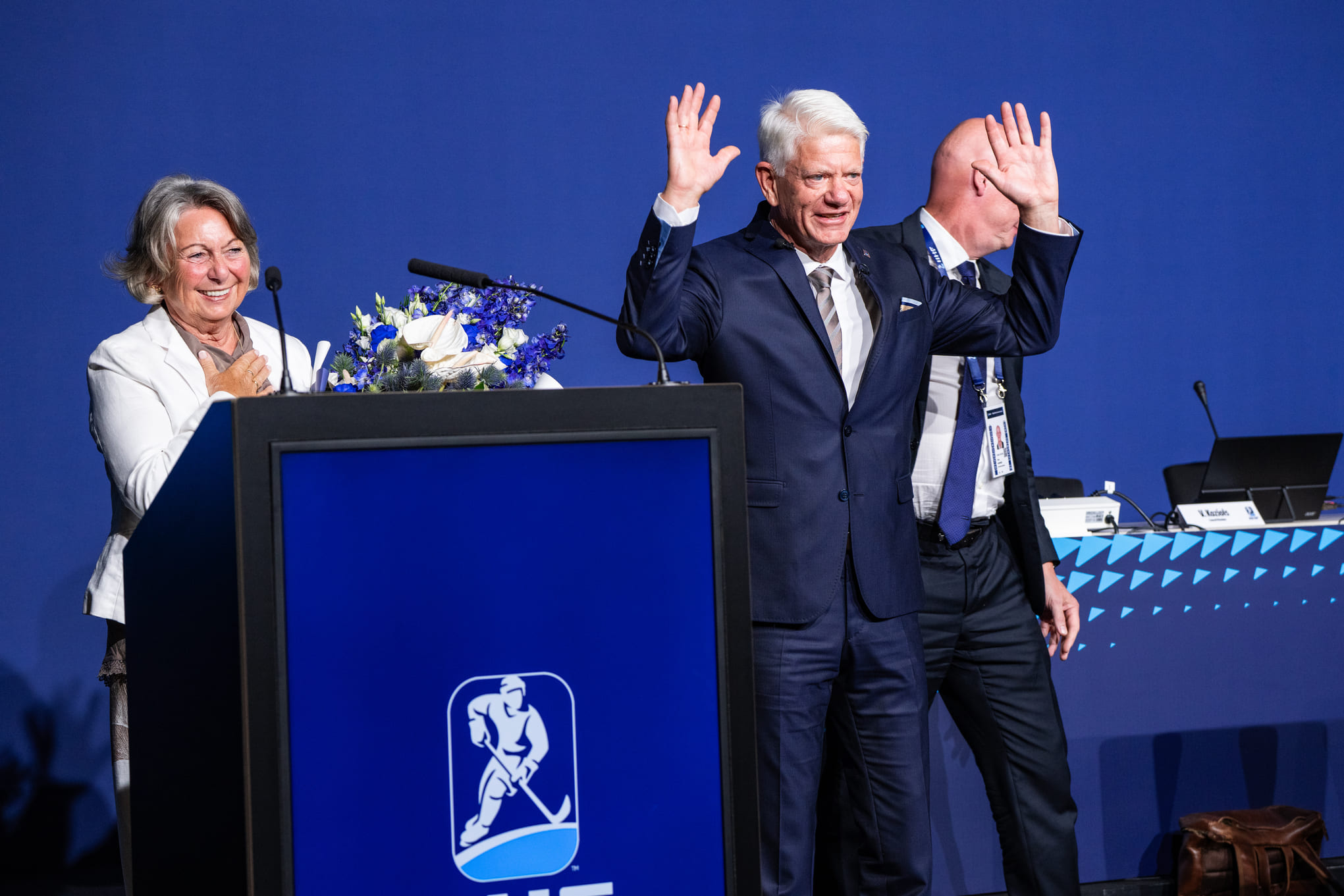
Just hours after being elected President of the International Ice Hockey Federation (IIHF), Franz Reindl sat down with IIHF.com to reflect on the journey that brought him to the helm of international ice hockey and share his vision for the future of the sport.
As the IIHF enters a new chapter, Reindl discusses the achievements and foundations established under his predecessor, Luc Tardif, the importance of building on that legacy, and the opportunities ahead. From strengthening international cooperation to driving innovation and growing the game worldwide, the new President offers an early glimpse into his priorities for the next four years.
In Part 1 of this two-part interview, Reindl reflects on the past, looks towards the future, and shares what it means to lead the global ice hockey family into its next chapter.
IIHF.com (Andrew Podnieks): “IIHF President Franz Reindl.” How does that sound?
IIHF President Franz Reindl (FR): I still look behind me, wondering who do you mean! For me, it’s a fantastic title, and I still can’t believe how significant it is.
AP: There are two kinds of families: your personal family and your IIHF family. How has your IIHF family helped you along this journey?
FR: I would describe my journey as going from the dressing room to the boardroom. I’ve been involved in hockey my entire life, as a player, manager, coach and official. I simply love the game, and I want to give something back.
If I can contribute to the IIHF and help our sport, that’s what I want to do. I’m very happy that the Member National Associations have placed their trust in me. They believe I can make a contribution, and in return, I will do everything I can to support the IIHF and our hockey family.
AP: When one thinks of your career, it goes back to 1976, when you were the youngest player on the Olympic team that surprised everyone by winning a bronze medal. That was exactly 50 years ago. How did you go from being that young rookie to becoming IIHF President?
FR: It’s been a long journey, with plenty of ups and downs. But one thing I’ve learned is that you can never achieve anything in hockey without good teammates.
Whether you’re playing junior hockey, senior hockey or for your national team, you need the people around you. Without them, you’re nothing in this sport.
In 1976, I earned the very last spot on the Olympic team. And now, here in Tenerife, I won the election in the last round. In some ways, it feels quite similar!
But the important thing now is teamwork. I’m looking forward to seeing how we come together as a new Council. I’m excited about the partnerships we can build over the next four years, and I’m very happy to have the opportunity to serve.
AP: Your main platform was built around the concept of three zones. How did you develop that idea to communicate your vision for the presidency to all 84 Member National Associations?
FR: I discussed it with the team supporting me. I’m fortunate to have very good hockey people around me, and we wanted to make it clear that this campaign was about hockey.
That’s how we arrived at the three zones: defensive, neutral and offensive. It’s a concept I feel very comfortable with because it comes directly from the game.
It’s not AI. It’s me. The identity, the message, the wording, it reflects who I am and what I believe.
And even developing that concept required a good team. I think it’s always valuable to come back to hockey itself because these are ideas that everyone in our sport can understand.
AP: In hockey terms, you won a big game, but now the real work begins. What are your first priorities?
FR: First, there are some basic commitments and meetings at the IIHF office. But after that, the most important priority is to bring the new Council together and build a strong team.
We have some very special people here, a lot of knowledge. With seven new Council members, this is a significant change, and we have an opportunity to create something special together.
The elections were competitive. We had 31 candidates for 15 positions. As I said in my short appreciation speech after the election, it’s a little like competing against each other throughout the season and then coming together as teammates on the national team.
Now, we are all on the same team. We are representing the IIHF, and we have to work together for the good of the IIHF and international ice hockey.
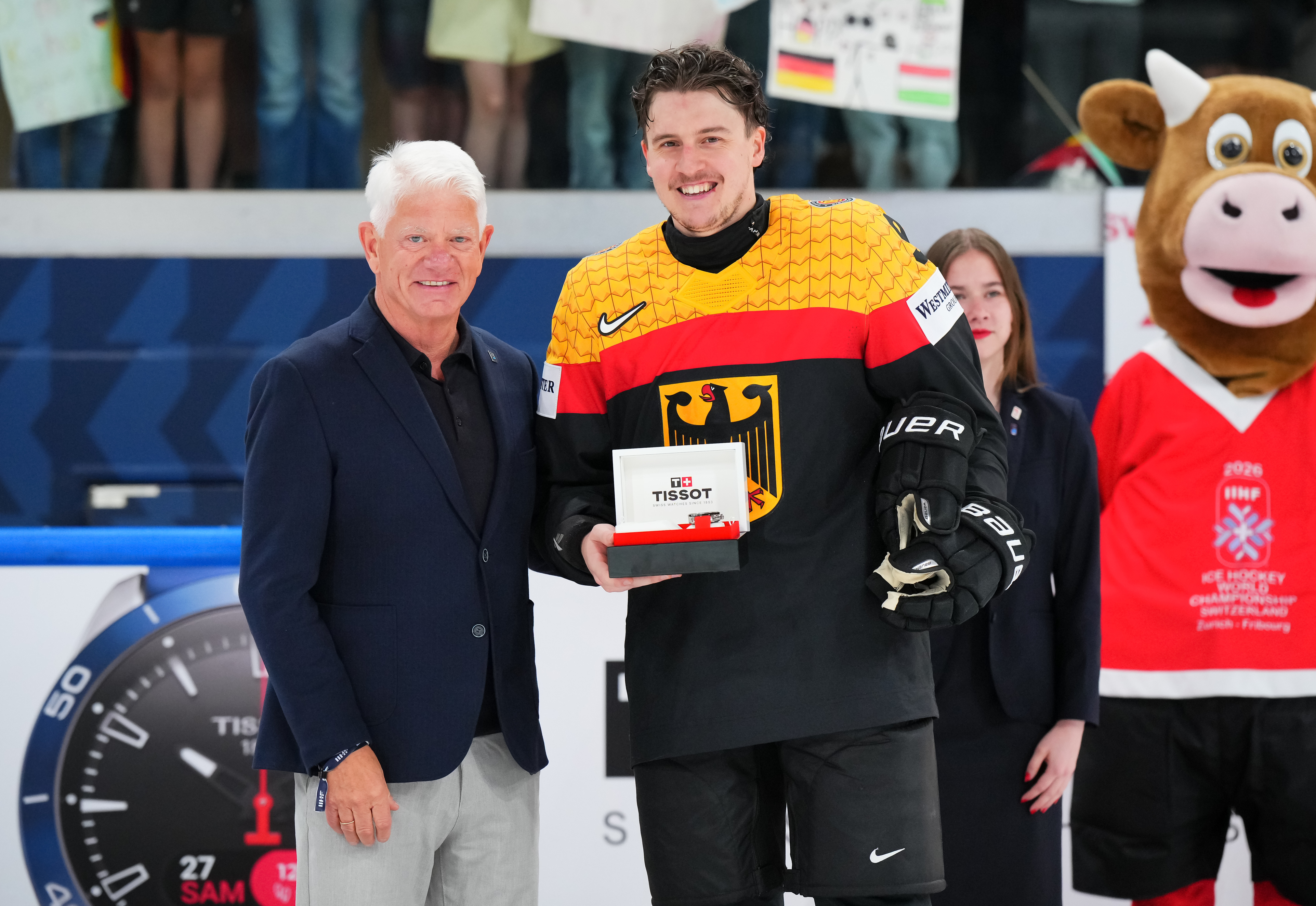
AP: As the new President, there will be initiatives you continue and others you develop differently. ICE26 was a unique initiative under Luc Tardif’s presidency. Do you see an opportunity to build on that legacy, perhaps through an ICE30 strategy?
FR: ICE26 was a very good plan. It provided structure, direction and clear priorities for the IIHF.
Now we need to look at what comes next. We can certainly build on that foundation, but I believe we also need to develop a broader, long-term strategy for international ice hockey.
For example, we need to look ahead to the Olympic Winter Games in 2030, 2034 and 2038, as well as the World Cup of Hockey and our World Championships. These competitions should be considered as part of one overall strategy.
For our major events, we want the best players competing against the best. We need to do everything possible to make best-on-best hockey a reality across our top competitions.
Ultimately, bringing the best players together is one of the greatest opportunities we have to grow our game.
That is my view, but I don’t want this to be about one person’s ideas. The President has a responsibility to lead, but I want everyone around the Council table to contribute.
We’ve already had our first meeting, and it was wonderful. For me, communication is absolutely essential, along with experience, openness and honesty.
AP: One common theme across the candidates who were running for Council was the importance of bringing together the larger and smaller hockey nations. How do you turn that ambition into reality?
FR: The IIHF already has excellent tools, resources and people who can support the development of the game at every level, from our leading hockey nations to those that are still developing.
The foundations are there. Now we need to make sure we use them effectively and that every Member National Association can benefit.
The Council has an important role to play, working closely with the IIHF office and the wider hockey community. Together, we should be a source of knowledge, expertise and support for all our Member National Associations.
There is a lot of enthusiasm, and I believe everyone is excited about what we can achieve together.
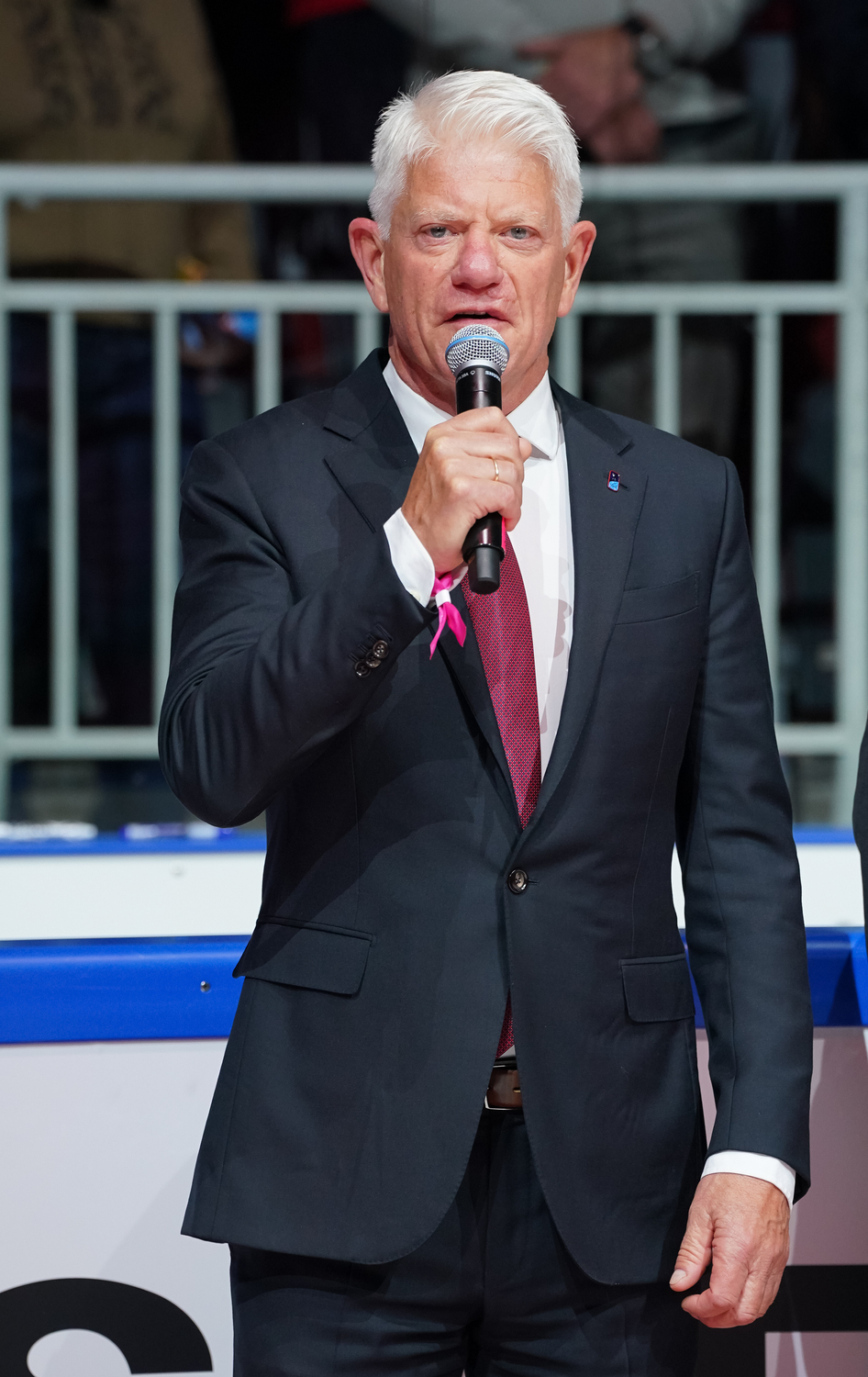
As the IIHF enters a new chapter, Reindl discusses the achievements and foundations established under his predecessor, Luc Tardif, the importance of building on that legacy, and the opportunities ahead. From strengthening international cooperation to driving innovation and growing the game worldwide, the new President offers an early glimpse into his priorities for the next four years.
In Part 1 of this two-part interview, Reindl reflects on the past, looks towards the future, and shares what it means to lead the global ice hockey family into its next chapter.
IIHF.com (Andrew Podnieks): “IIHF President Franz Reindl.” How does that sound?
IIHF President Franz Reindl (FR): I still look behind me, wondering who do you mean! For me, it’s a fantastic title, and I still can’t believe how significant it is.
AP: There are two kinds of families: your personal family and your IIHF family. How has your IIHF family helped you along this journey?
FR: I would describe my journey as going from the dressing room to the boardroom. I’ve been involved in hockey my entire life, as a player, manager, coach and official. I simply love the game, and I want to give something back.
If I can contribute to the IIHF and help our sport, that’s what I want to do. I’m very happy that the Member National Associations have placed their trust in me. They believe I can make a contribution, and in return, I will do everything I can to support the IIHF and our hockey family.
AP: When one thinks of your career, it goes back to 1976, when you were the youngest player on the Olympic team that surprised everyone by winning a bronze medal. That was exactly 50 years ago. How did you go from being that young rookie to becoming IIHF President?
FR: It’s been a long journey, with plenty of ups and downs. But one thing I’ve learned is that you can never achieve anything in hockey without good teammates.
Whether you’re playing junior hockey, senior hockey or for your national team, you need the people around you. Without them, you’re nothing in this sport.
In 1976, I earned the very last spot on the Olympic team. And now, here in Tenerife, I won the election in the last round. In some ways, it feels quite similar!
But the important thing now is teamwork. I’m looking forward to seeing how we come together as a new Council. I’m excited about the partnerships we can build over the next four years, and I’m very happy to have the opportunity to serve.
AP: Your main platform was built around the concept of three zones. How did you develop that idea to communicate your vision for the presidency to all 84 Member National Associations?
FR: I discussed it with the team supporting me. I’m fortunate to have very good hockey people around me, and we wanted to make it clear that this campaign was about hockey.
That’s how we arrived at the three zones: defensive, neutral and offensive. It’s a concept I feel very comfortable with because it comes directly from the game.
It’s not AI. It’s me. The identity, the message, the wording, it reflects who I am and what I believe.
And even developing that concept required a good team. I think it’s always valuable to come back to hockey itself because these are ideas that everyone in our sport can understand.
AP: In hockey terms, you won a big game, but now the real work begins. What are your first priorities?
FR: First, there are some basic commitments and meetings at the IIHF office. But after that, the most important priority is to bring the new Council together and build a strong team.
We have some very special people here, a lot of knowledge. With seven new Council members, this is a significant change, and we have an opportunity to create something special together.
The elections were competitive. We had 31 candidates for 15 positions. As I said in my short appreciation speech after the election, it’s a little like competing against each other throughout the season and then coming together as teammates on the national team.
Now, we are all on the same team. We are representing the IIHF, and we have to work together for the good of the IIHF and international ice hockey.
AP: As the new President, there will be initiatives you continue and others you develop differently. ICE26 was a unique initiative under Luc Tardif’s presidency. Do you see an opportunity to build on that legacy, perhaps through an ICE30 strategy?
FR: ICE26 was a very good plan. It provided structure, direction and clear priorities for the IIHF.
Now we need to look at what comes next. We can certainly build on that foundation, but I believe we also need to develop a broader, long-term strategy for international ice hockey.
For example, we need to look ahead to the Olympic Winter Games in 2030, 2034 and 2038, as well as the World Cup of Hockey and our World Championships. These competitions should be considered as part of one overall strategy.
For our major events, we want the best players competing against the best. We need to do everything possible to make best-on-best hockey a reality across our top competitions.
Ultimately, bringing the best players together is one of the greatest opportunities we have to grow our game.
That is my view, but I don’t want this to be about one person’s ideas. The President has a responsibility to lead, but I want everyone around the Council table to contribute.
We’ve already had our first meeting, and it was wonderful. For me, communication is absolutely essential, along with experience, openness and honesty.
AP: One common theme across the candidates who were running for Council was the importance of bringing together the larger and smaller hockey nations. How do you turn that ambition into reality?
FR: The IIHF already has excellent tools, resources and people who can support the development of the game at every level, from our leading hockey nations to those that are still developing.
The foundations are there. Now we need to make sure we use them effectively and that every Member National Association can benefit.
The Council has an important role to play, working closely with the IIHF office and the wider hockey community. Together, we should be a source of knowledge, expertise and support for all our Member National Associations.
There is a lot of enthusiasm, and I believe everyone is excited about what we can achieve together.